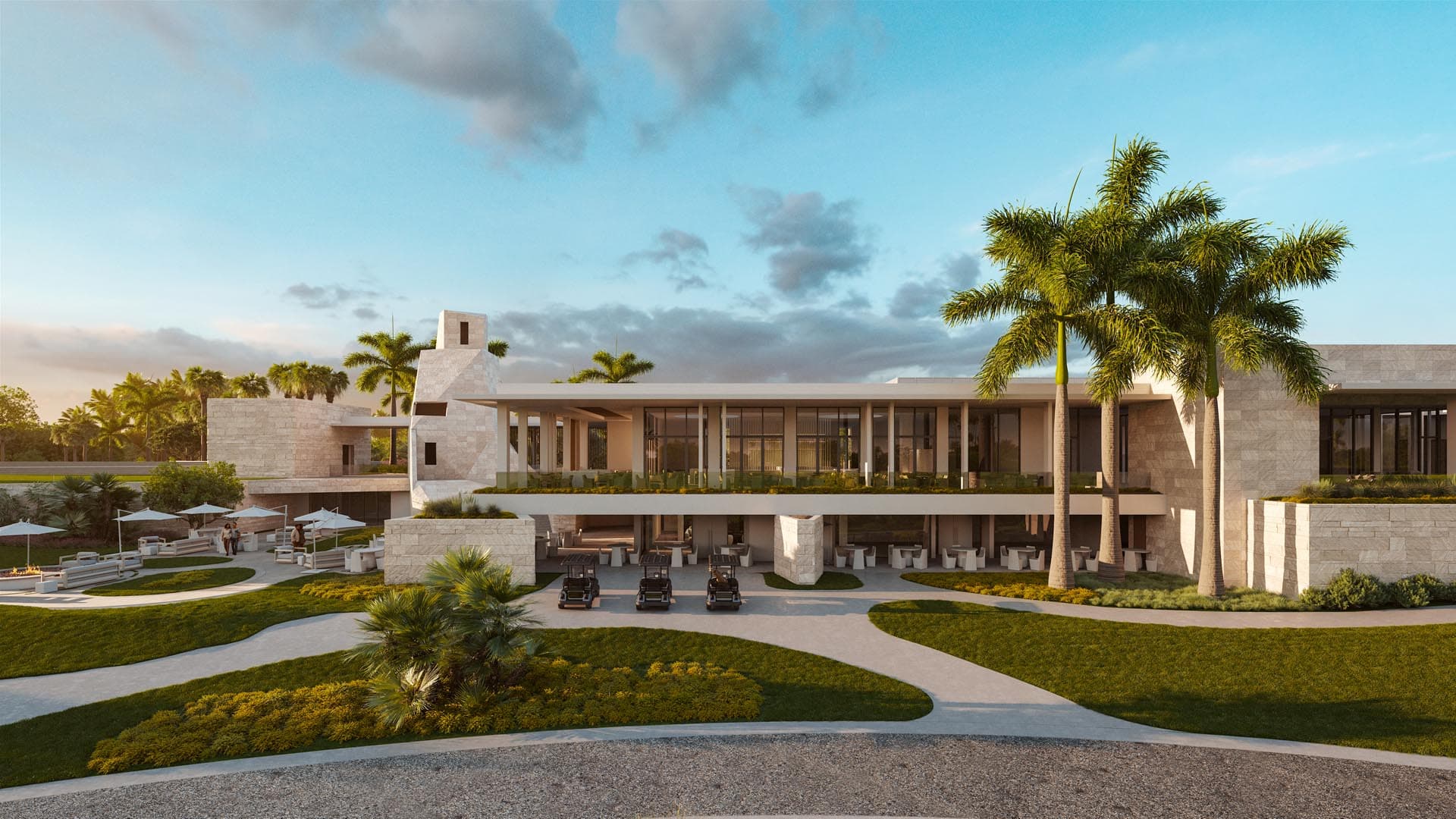
When Bel-Air Country Club opened its gates in 1925, the surrounding hillsides held more wild coyotes than movie moguls. Nearly a century later, this George C. Thomas Jr. masterpiece stands as one of Southern California's most theatrical golf experiences—where suspension bridges guide players over gullies and elevators transport them between holes carved into the steep canyon terrain of Tarzana.
Founding and the Thomas Legacy
Bel-Air Country Club represents the final chapter in George C. Thomas Jr.'s remarkable Los Angeles trilogy, joining Los Angeles Country Club (North) and Riviera Country Club as his definitive Southern California works. The Philadelphia-born architect-turned-golf designer selected a dramatically challenging site in the Santa Monica Mountains, where elevation changes of over 200 feet between holes would require engineering solutions unprecedented in golf course design.
Working alongside William P. Bell, Thomas carved 18 holes through terrain so vertical that conventional routing proved impossible. The solution became Bel-Air's signature: a tunnel beneath Bellagio Road connects the front and back nines, while an elevator system transports golfers up the steepest climbs. Most famously, the par-3 10th hole required construction of what remains the only suspension bridge on any golf course in America—a 60-foot span that golfers must cross to reach the tee.
The club's founding membership included early Hollywood executives who recognized the potential of this wild canyon land. Initial membership fees in 1925 started at $500, approximately $7,500 in today's dollars.
Early Years and Hollywood's Discovery
Bel-Air's proximity to the nascent film industry proved prophetic. By the 1930s, the membership roster read like a Hollywood directory: Howard Hughes maintained a regular foursome, while studio heads Jack Warner and Louis B. Mayer conducted business deals between holes. The club's dramatic topography—with its suspension bridge and canyon views—frequently appeared as backdrop in films of the era.
The original Thomas design measured 6,200 yards from the championship tees, modest by today's standards but formidable given the target golf required by the mountainous terrain. The course's signature feature, beyond its engineering marvels, was Thomas's distinctive bunkering: deep, irregularly shaped sand hazards that appeared to cascade naturally down the hillsides.
Growth and Multiple Renovations
Bel-Air's evolution over eight decades involved nearly every prominent golf course architect of the post-war era. Dick Wilson made the first significant changes in the 1960s, followed by George Fazio in the 1970s. Robert Trent Jones Jr. redesigned several holes in the 1980s, while Tom Fazio added water features and reshaped bunkers in the 1990s.
Each renovation reflected the design philosophy of its era. Wilson lengthened holes and added modern irrigation. Fazio introduced artificial water hazards to increase difficulty. The Joneses emphasized strategic shot-making through repositioned bunkers. By 2015, little remained of Thomas's original design intent.
The cumulative effect of these changes had obscured what made Bel-Air special. Water hazards appeared where none had existed in Thomas's naturalistic design. Bunkers lost their irregular, flowing edges. The course played to 6,505 yards but felt disconnected from its architectural heritage.
Tournament History and Competitive Legacy
Unlike its Thomas siblings Riviera and Los Angeles Country Club, Bel-Air never hosted major professional tournaments. The club's mountainous terrain and limited spectator areas made it unsuitable for large galleries. Instead, Bel-Air built its competitive reputation through member tournaments and celebrity golf events.
The club's annual championships consistently featured handicaps among the lowest in Southern California. The demanding approach shots to elevated greens and the precision required on the narrow canyon holes created scoring conditions that separated scratch players from single-digit handicappers. Tournament scoring averages typically ran 3-4 strokes higher than at flatter venues.
The Doak Restoration: Return to Thomas
In 2018, Bel-Air completed the most significant renovation in its history. Tom Doak, renowned for his restoration work at classic American courses, undertook what amounted to an archaeological project: removing nearly 50 years of alterations to reveal Thomas's original design philosophy.
Doak's restoration removed artificial water hazards that had no basis in Thomas's plan. He rebuilt bunkers using period photographs and topographical surveys, restoring the irregular, flowing shapes that Thomas called "splashy." Most importantly, Doak preserved every engineering marvel that made Bel-Air unique: the suspension bridge, the tunnel system, and the elevator remain exactly as Thomas envisioned.
The restored course measures 6,505 yards from the championship tees with a slope rating of 135. More significantly, it plays as Thomas intended: target golf through dramatic terrain where precision matters more than power.
Bel-Air Today
Current membership at Bel-Air reflects both Hollywood tradition and modern Los Angeles wealth. The club maintains three dining venues: the Grill Room for casual meals, Top of the Tee for post-round refreshments, and the formal Bel-Air Room for special events. Amenities include card rooms, full locker facilities, and both valet and self-parking—essential given the club's hillside location.
Practice facilities remain limited by the steep terrain: a practice range and putting green occupy the few flat areas available. This constraint forces members to hone their games on the course itself, much as Thomas intended.
The club's location in Tarzana, while technically within Los Angeles city limits, feels remarkably removed from urban pressures. Coyotes and deer still roam the property at dawn, much as they did in 1925.
Timeline
| Year | Event |
|---|---|
| 1925 | Club founded by George C. Thomas Jr. and William P. Bell |
| 1930s | Hollywood elite discover Bel-Air |
| 1960s | Dick Wilson renovation |
| 1970s | George Fazio modifications |
| 1980s | Robert Trent Jones Jr. redesign |
| 1990s | Tom Fazio water features added |
| 2018 | Tom Doak restoration completed |