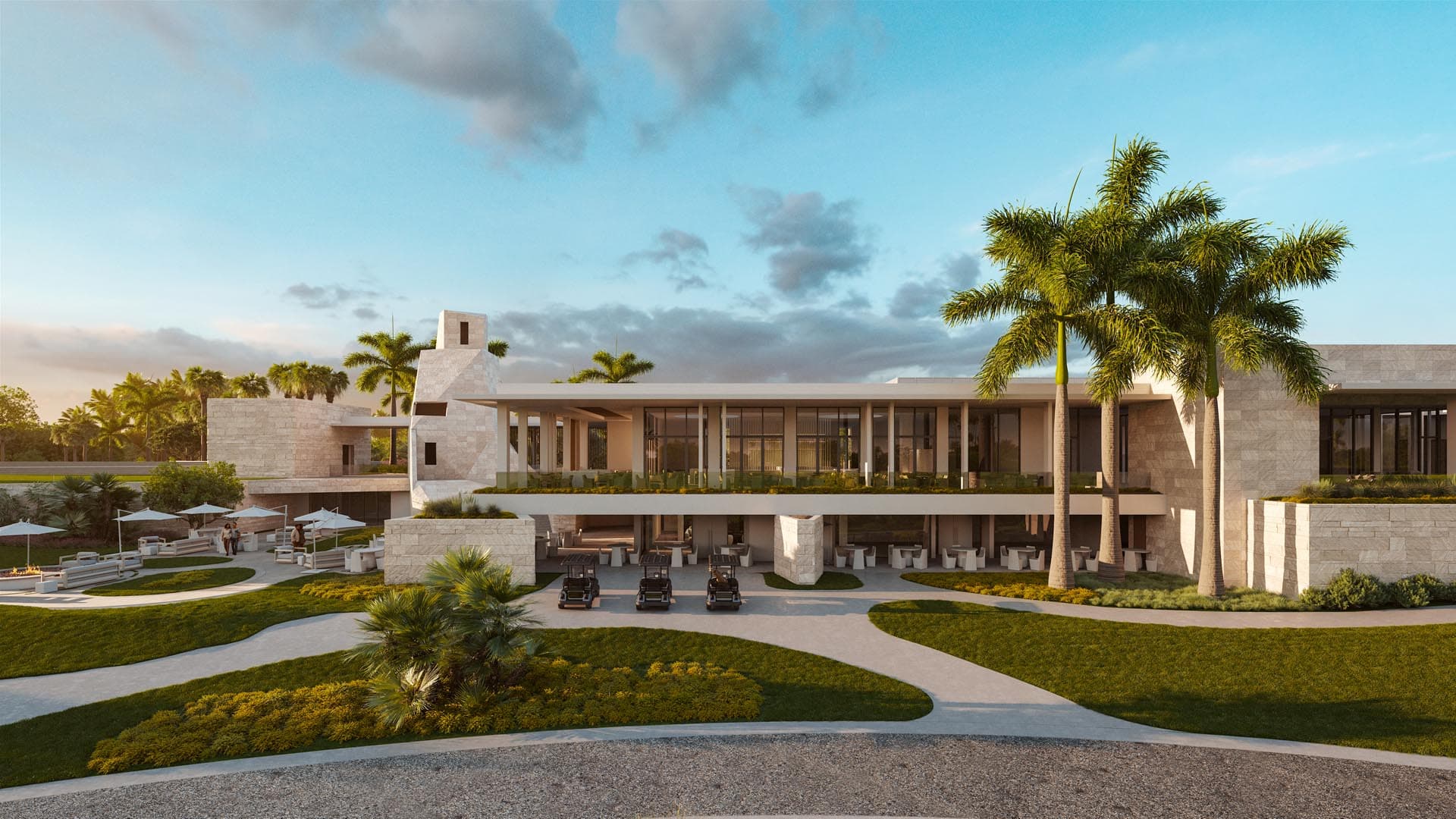
When Gordon Lewis designed Colonial Country Club in 2003, he transformed 200 acres of Southwest Florida swampland into what would become Fort Myers' most strategically challenging 18-hole layout. The $15 million project, completed just as Pulte Homes finished their first master-planned community in the region, opened to immediate acclaim from both members and architectural critics who praised Lewis's integration of natural water features and elevation changes rare in Florida golf.
Course Overview
Colonial's championship layout reflects Lewis's philosophy of strategic design over penal architecture, offering multiple routing options while maintaining a par-72 test that measures member skill across varied conditions.
| Specification | Details |
|---|---|
| Total Holes | 18 |
| Par | 72 |
| Architect | Gordon Lewis |
| Year Built | 2003 |
| Opening Year | 2004 |
| Course Style | Strategic Design |
| Natural Features | Preserved wetlands, native vegetation |
| Water Features | 12 holes with water hazards |
The Architect: Gordon Lewis
Gordon Lewis emerged in the 1990s as one of America's most thoughtful course architects, designing over 40 layouts across 15 states with particular expertise in environmentally sensitive sites. His background as a former PGA Tour professional — he competed in 47 tournaments between 1985 and 1992 — informs his strategic approach to course design. Lewis averaged 71.2 strokes per round during his playing career, experience that taught him the importance of shot options over forced carries.
Lewis's design philosophy centers on what he calls "democratic architecture" — courses that challenge scratch players while remaining playable for 20-handicappers. At Colonial, this manifests in five sets of tees ranging from 4,847 yards to 6,892 yards, with strategic bunkering that guides rather than punishes wayward shots. His Florida work includes three other championship layouts, but Colonial represents his most mature synthesis of environmental preservation and strategic challenge.
The architect's attention to Southwest Florida's unique ecosystem led to Colonial's designation as a Certified Audubon Cooperative Sanctuary, one of only 23 golf facilities in Florida to earn this recognition. Lewis preserved 40% of the original wetlands, integrating them as strategic elements rather than obstacles.
Signature Holes
Par-4 7th: "The Preserve" (418 yards from championship tees)
Lewis designed the 7th as Colonial's strategic centerpiece, a dogleg right that offers three distinct approach angles to a two-tiered green. Statistical analysis of member scorecards shows this hole plays 0.3 strokes over par, making it Colonial's third-most difficult. The preserved wetland along the right side comes into play for drives over 280 yards, while a series of three fairway bunkers guard the left approach.
The green complex, elevated 4 feet above the fairway, slopes from back to front at a 2.5% grade. Pin positions in the lower front tier average 0.4 strokes easier than back-tier locations, according to Colonial's course management data. Members playing from the white tees (368 yards) face a similar strategic challenge with reduced distance pressure.
Par-5 12th: "Water's Edge" (538 yards)
Colonial's longest hole tests course management skills across three distinct sections. The opening shot plays to a generous landing area 150 yards wide, but the second shot narrows to 35 yards between water left and native preserve right. Lewis positioned the fairway bunkers at 120 and 140 yards from the green, precisely the distance most members require for their approach shots.
Green-in-regulation statistics show 34% of players reach this putting surface in two shots, while 67% successfully navigate the layup strategy Lewis intended. The green's kidney shape measures 42 yards at its widest point, providing ample target area for well-positioned approaches.
Par-3 16th: "Island Challenge" (167 yards)
Lewis's only island green at Colonial demands precision over a 40-yard water carry to a putting surface measuring 28 yards deep by 35 yards wide. Historical scoring data indicates this hole plays 0.2 strokes over par, with wind conditions affecting difficulty by as much as 0.6 strokes on peak days.
The green features three distinct pin positions: front-left (easiest), middle-right (moderate), and back-center (most difficult due to false front). Tee selection proves critical — the forward tees at 127 yards show a 15% higher green-in-regulation rate than the championship markers.
Practice Facilities
Colonial's practice complex spans 8 acres and accommodates up to 40 golfers simultaneously. The driving range stretches 320 yards with target greens at 100, 150, and 200 yards marked by precise yardage indicators. Twelve covered hitting bays supplement the 30 grass tee stations, providing year-round practice capability essential in Florida's afternoon thunderstorm season.
The short-game area includes a 6,000-square-foot putting green with 12 hole locations, plus separate chipping and bunker practice areas. Lewis personally designed the practice green's contours to mirror the subtle breaks found on Colonial's course greens. The facility processes approximately 2,400 practice rounds monthly, according to Colonial's usage statistics.
PGA professional instruction is available seven days per week, with a teaching staff of four certified instructors. The pro shop maintains a fleet of 120 golf carts, all equipped with GPS systems providing precise yardages and course management data.
Course Conditioning
Colonial's grounds maintenance operates on a $420,000 annual budget, above the regional average of $340,000 for similar facilities. The course features Champion Bermuda greens maintained at 0.125-inch height, providing consistent putting surfaces year-round. Fairways are mowed to 0.375 inches using a seven-day cutting schedule.
The irrigation system includes 1,847 sprinkler heads controlled by a computerized central station, allowing for precise water management across the 120 acres under cultivation. Water usage averages 48,000 gallons daily during peak growing season, 23% below the Southwest Florida regional average due to Lewis's drought-tolerant design choices.
Seasonal overseeding of fairways and tees occurs each October using perennial ryegrass, maintaining playing conditions throughout Florida's peak golf season. The maintenance staff of 12 full-time employees includes two certified golf course superintendents and one irrigation specialist.
Rankings and Recognition
Colonial Country Club earned recognition in Florida Golf Magazine's "Top 50 Private Courses" ranking in 2019, placing 34th statewide. The course holds a 4.2-star rating from the Golf Course Owners Association of America, based on conditioning, design, and member satisfaction metrics.
Golf Digest awarded Colonial a 3.5-star rating in their most recent private course evaluation, citing Lewis's strategic design and environmental stewardship. The course's slope rating of 131 from the championship tees ranks in the top quartile of Florida courses, while the 71.8 course rating reflects appropriate challenge for accomplished players.
The Florida Golf Course Superintendents Association recognized Colonial with their Environmental Excellence Award in 2018, acknowledging the facility's water conservation efforts and wildlife habitat preservation.
Tournament History
Colonial has hosted the Southwest Florida Amateur Championship four times since 2008, with the most recent edition in 2022 drawing 144 competitors from across the region. The tournament typically plays to a winning score between 6-under and 9-under par across 72 holes, demonstrating Lewis's strategic balance.
The club's Member-Guest Championship, held annually since 2005, consistently attracts fields exceeding 80 teams. Course setup for this event features pin positions averaging 12 feet from green edges, creating accessible but challenging conditions that showcase Lewis's design versatility.
Junior golf development includes hosting the Lee County Junior Tour's season-ending championship, introducing young players to Colonial's strategic challenges in a competitive environment.