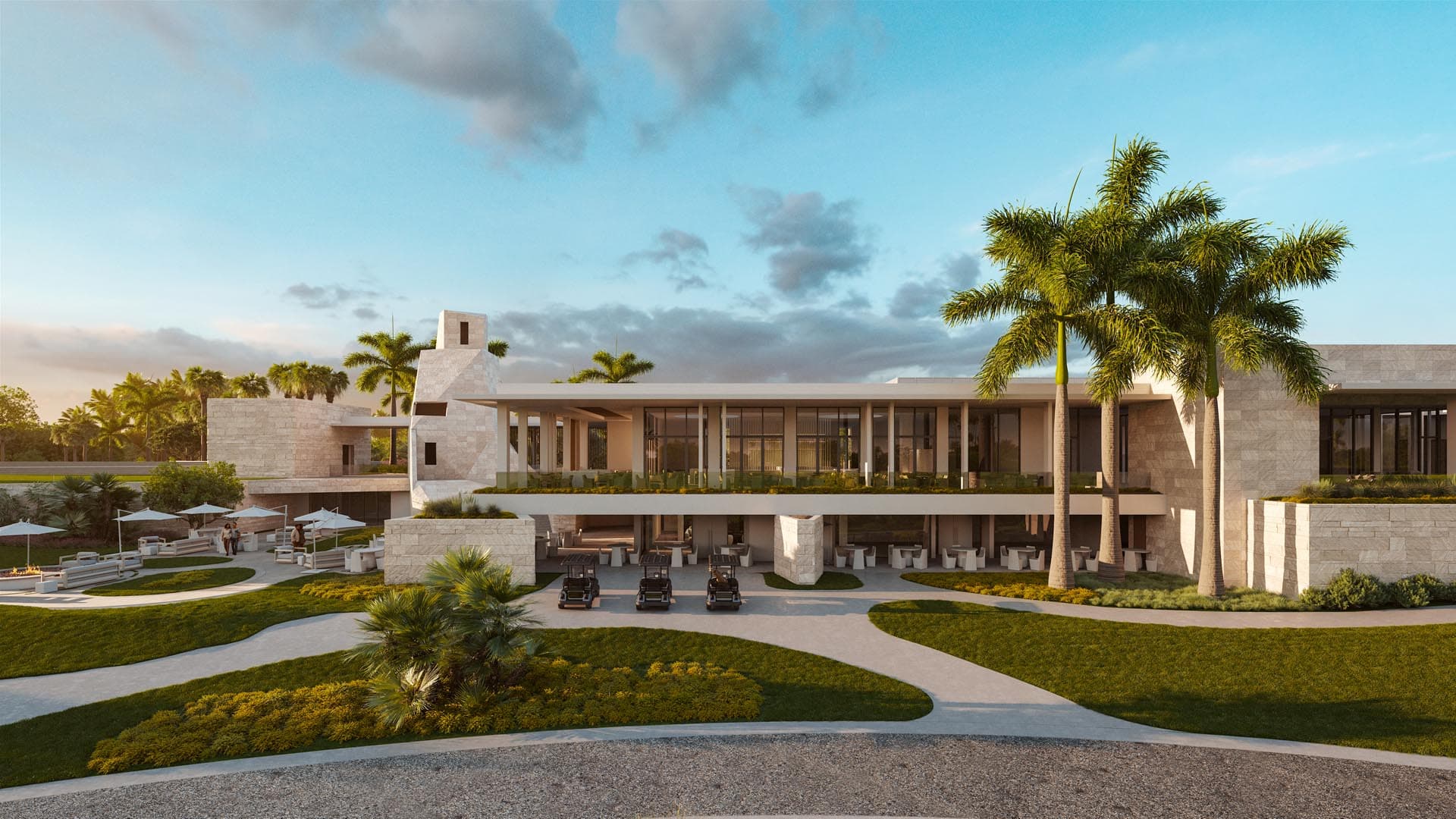
When John F. Harbottle III set out to design Big Canyon Country Club in 1971, he confronted a unique challenge: transforming a narrow canyon into a championship golf course that would challenge skilled players without overwhelming recreational members. The result, after five decades of refinement, stands as one of Newport Beach's most strategically demanding layouts, where precision consistently trumps power.
Course Overview
| Specification | Detail |
|---|---|
| Architect | John F. Harbottle III, ASGCA |
| Year Opened | 1971 |
| Total Yardage | 6,667 yards |
| Par | 72 |
| Slope Rating | 136 |
| Course Rating | Not specified |
| Holes | 18 |
| Location | Newport Beach, CA |
At 6,667 yards with a slope rating of 136, Big Canyon presents what course raters classify as "above average" difficulty. The slope rating places it in the 85th percentile of courses nationally, indicating that higher-handicap players will find it proportionally more challenging than scratch golfers.
The Architect: John F. Harbottle III
John F. Harbottle III represents the second generation of a California golf architecture dynasty. His father, John F. Harbottle Jr., established the family's reputation designing courses throughout the Pacific Coast in the 1950s and 1960s. The younger Harbottle, who earned membership in the American Society of Golf Course Architects (ASGCA) in 1968, specialized in maximizing strategic interest within constrained sites.
Harbottle's design philosophy centered on what he termed "strategic minimalism" — creating multiple playing angles and risk-reward scenarios without relying on penal hazards. His portfolio includes more than 40 courses across California, Arizona, and Nevada, with Big Canyon representing his most enduring work. The course reflects his mastery of canyon topography, a skill honed on similar projects in Southern California's challenging terrain.
Unlike his contemporaries who favored dramatic elevation changes, Harbottle preferred subtle undulations that revealed their complexity only upon repeated play. This approach proved particularly effective at Big Canyon, where the natural canyon walls provided inherent definition while his routing maximized strategic variety.
Signature Holes
The 7th Hole: Canyon's Edge
The par-4 seventh hole, measuring 425 yards from the championship tees, exemplifies Harbottle's strategic philosophy. The tee shot plays across a canyon to a landing area that narrows progressively at longer distances. Drives exceeding 280 yards encounter a fairway that pinches to just 22 yards wide, while more conservative plays leave approaches of 160-180 yards to a green protected by bunkers on three sides.
Statistical analysis of member scorecards reveals that attempts to drive past the fairway's narrowest point result in penalty strokes 34% of the time, while conservative positioning yields scoring averages 0.7 strokes better despite longer approach shots.
The 12th Hole: The Elbow
Big Canyon's signature par-5, stretching 535 yards, features a dogleg right that turns 85 degrees around mature eucalyptus trees. The strategic complexity lies in the second shot decision: aggressive players can attempt to reach the green in two by carrying a cross-bunker 240 yards from the landing zone, while conservative approaches require precise positioning to avoid bunkers that guard the preferred angle for the third shot.
Course records indicate that fewer than 15% of members attempt the carry on their second shots, yet those who succeed average 4.2 strokes on the hole compared to 4.8 for those playing conservatively.
The 16th Hole: The Cauldron
The par-3 sixteenth, playing 165 yards to an elevated green, demands precision in both distance and direction. The green sits 25 feet above the tee, creating optical illusions that have confounded players for decades. Bunkers surround the putting surface on all sides, leaving no bailout areas for timid shots.
Wind patterns in the canyon create additional complexity, with afternoon breezes typically adding 10-15 yards of effective distance while morning calms can leave shots short. Member data shows this hole plays 0.4 strokes over par on average, making it statistically the most difficult one-shotter on the course.
Practice Facilities
Big Canyon's practice facilities occupy 3.2 acres within the canyon's confines, a compact footprint that maximizes functionality despite spatial constraints. The driving range stretches 250 yards to the south, with 24 hitting stations arranged in a tiered configuration that follows the natural slope.
The short game area features three practice bunkers with varying sand depths and lie angles, plus a putting green measuring 4,500 square feet. Distance markers at 75, 100, 125, and 150 yards allow for precise wedge practice, while target greens at multiple distances simulate on-course conditions.
Professional instruction operates through a staff of three PGA-certified professionals who conduct an average of 180 lessons monthly during peak season. The practice facility's design reflects Harbottle's attention to functionality over aesthetics — every element serves a specific training purpose.
Conditioning Standards
Big Canyon maintains bent grass greens year-round, a demanding choice in Southern California's Mediterranean climate that requires precise irrigation management. The greens average 11 on the Stimpmeter during summer months and 10 during winter, speeds that complement Harbottle's subtle green contours without becoming unplayable.
Fairways feature a blend of Bermuda and ryegrass overseeding, providing optimal playing conditions throughout the year. The maintenance staff of 12 full-time employees manages 85 acres of maintained turf, using an irrigation system upgraded in 2018 that reduced water consumption by 23% while improving playing conditions.
Bunker sand consists of angular silica sand imported from Arizona, replaced annually to maintain consistent playing characteristics. The course features 47 bunkers totaling 2.1 acres, each raked twice daily during peak playing seasons.
Rankings and Recognition
Big Canyon has never appeared in national magazine rankings, reflecting its status as a well-kept secret among Southern California golfers rather than a tournament venue seeking publicity. Local golf publications consistently rate it among Orange County's top 15 private courses, citing strategic variety and conditioning quality.
The course record of 63 was established in 1984 and has been matched only twice since, indicating consistent setup standards that prevent scoring becoming too lenient. Average scores for members with handicaps below 10 hover around 74-75, suggesting appropriate challenge levels for skilled players.
Tournament History
Big Canyon has hosted the Orange County Amateur Championship three times (1978, 1989, 2003), with winning scores of even par, 2-under par, and 1-under par respectively. These scoring averages reflect the course's resistance to low numbers even among elite amateur players.
The club's member-guest tournament, held annually since 1975, attracts 144 players competing in a two-day stroke play format. Historical records show winning scores ranging from 4-under to 3-over par, depending on weather conditions and pin positions.
Corporate outings remain limited to 12 per year, maintaining the course's primary focus on member play. This restricted schedule helps preserve optimal conditioning while generating modest additional revenue.