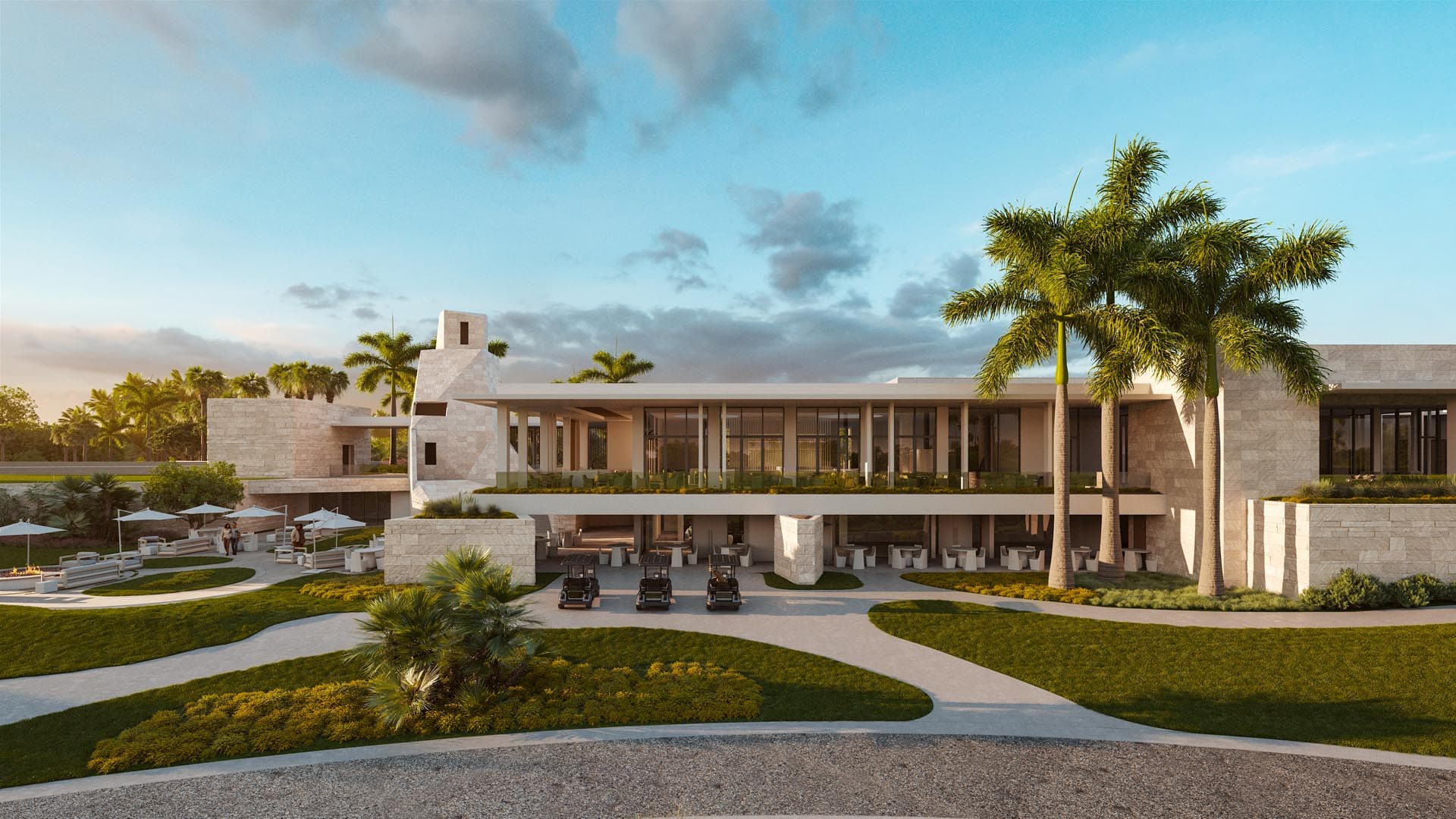
At the northern tip of Key Largo, Card Sound Golf Club stands as Ocean Reef Club's centerpiece, its 6,500-yard championship layout carved from tropical hardwood hammocks and salt marshes in 1974. The Bruce Devlin and Robert Von Hagge design represents one of the earliest examples of environmentally sensitive golf architecture in South Florida, predating modern sustainability concepts by decades while creating a course that remains relevant among today's most discerning players.
Course Overview
| Specification | Details |
|---|---|
| Architect | Bruce Devlin & Robert Von Hagge |
| Year Built | 1974 |
| Renovation | 2015 (Andrew Green) |
| Length | 6,500 yards |
| Par | 72 |
| Holes | 18 |
| Setting | Tropical hardwood hammock |
| Community | Ocean Reef Club |
The Architects: Devlin & Von Hagge Partnership
Bruce Devlin and Robert Von Hagge formed their architectural partnership in 1970, bringing together Devlin's tournament experience as a professional golfer with Von Hagge's design innovation. Devlin, an Australian who won eight PGA Tour events and represented his country in seven World Cups, understood course strategy from a player's perspective. Von Hagge, trained in landscape architecture, pushed boundaries in golf course aesthetics and environmental integration.
The duo designed over 80 courses during their partnership, with Card Sound representing their mastery of tropical golf architecture. Von Hagge's signature amphitheater greens and strategic water features combined with Devlin's understanding of shot values created layouts that challenged professionals while remaining accessible to accomplished amateurs. Their work at Hazeltine National Golf Club hosted the 1970 U.S. Open, while their TPC at The Woodlands became a PGA Tour venue.
At Card Sound, the architects faced unique constraints: a narrow land corridor between Biscayne Bay and the Atlantic Ocean, existing mangrove ecosystems, and Florida's then-emerging environmental regulations. Their solution integrated golf holes with the natural landscape, routing the course through existing hammocks and around wetland areas rather than attempting wholesale environmental modification.
Signature Holes
3rd Hole: "Mangrove Alley"
The 425-yard par-4 third hole exemplifies Devlin and Von Hagge's environmental integration philosophy. The fairway curves left through a natural corridor between mangrove stands, with the approach shot played over a tidal creek to an elevated green protected by native vegetation. The hole demands accuracy over distance, with bailout areas eliminated by the natural boundaries.
7th Hole: "Reef View"
Card Sound's most photographed hole, the 185-yard par-3 seventh, offers views across Florida Bay to the reef tract beyond. The green sits 15 feet above sea level on a natural limestone outcrop, with native coontie palms and wild coffee shrubs framing the target. Trade winds from the southeast add 15-20 yards to approach shots during winter months, while summer's prevailing southwest breezes can subtract similar yardage.
14th Hole: "Double Cross"
The 590-yard par-5 fourteenth presents Card Sound's most strategic challenge. Two water crossings—at 260 yards and 420 yards from the championship tees—force three distinct decisions. Conservative players lay up twice, accepting a wedge third shot. Aggressive players can carry both hazards with precise execution, leaving short irons to a receptive green. The hole's risk-reward calculus changes dramatically with wind direction and intensity.
17th Hole: "Sound Crossing"
The penultimate hole, a 210-yard par-3, plays entirely over Card Sound's tidal waters to a green positioned on a natural island connected by cart path bridges. The putting surface measures 6,000 square feet to accommodate varying pin positions and wind conditions. During low tide, the water hazard shrinks by 30%, revealing sandy areas that can save errant tee shots. High tide presents no margin for error.
Practice Facilities
Card Sound's practice complex reflects the same environmental sensitivity as the course design. The driving range stretches 280 yards southward into prevailing winds, with target greens positioned at 125, 150, 175, and 200 yards. Natural berms constructed from indigenous coral rock and plantings of native firebush and wild lime screen the range from residential areas.
The short game area encompasses 1.2 acres, featuring four practice greens with varying speeds and contours that mirror conditions found on the course. Sand practice areas utilize the same crushed coquina shell found in course bunkers, while chipping greens replicate the elevation changes and wind exposures players encounter during rounds.
Course Conditioning
Ocean Reef's location presents unique maintenance challenges addressed through specialized programs. The course features Celebration Bermudagrass on tees and fairways, selected for its salt tolerance and ability to recover from tropical storm damage. Greens utilize TifEagle Bermuda, maintained at speeds averaging 11.5 on the Stimpmeter during peak season.
The irrigation system draws from on-site wells tapping the Biscayne Aquifer, with water treated through reverse osmosis to remove salts that accumulate near the ocean interface. Daily salinity testing ensures water quality remains within acceptable parameters for turf health. Native area maintenance follows Audubon International guidelines, with controlled burns conducted every three years to maintain hammock ecosystem health.
Hurricane preparedness protocols developed after Category 5 Hurricane Andrew in 1992 include pre-storm drainage system activation and post-storm debris removal procedures. The 2015 renovation added underground utilities and reinforced cart path bridges to withstand 150-mph winds.
Rankings and Recognition
Card Sound Golf Club has maintained consistent recognition within Florida's private club rankings despite its limited membership and invitation-only access policy. Golf Digest's "America's 100 Greatest Golf Courses" has included Card Sound in its state-by-state rankings since 1985, currently positioned among Florida's top 25 private courses.
The course's environmental integration earned recognition from Audubon International in 1996, becoming one of the first Florida courses to achieve Certified Audubon Cooperative Sanctuary status. The designation acknowledges the club's protection of 47 acres of native habitat within the course boundaries, supporting populations of great blue herons, roseate spoonbills, and the endangered American crocodile.
Golf Magazine's "Top 100 Courses You Can Play" excluded Card Sound due to its invitation-only access policy, though course architecture critics consistently praise the layout's strategic values and environmental sensitivity.
Tournament History
Card Sound's tournament history reflects its intimate scale and exclusive membership. The club has hosted Ocean Reef's Member-Guest Championship annually since 1976, with the four-day event limited to 64 teams. The tournament format alternates between stroke play and modified match play, with scoring averages indicating the course's resistance to low scores despite its modest 6,500-yard length.
Professional tournament activity has been limited by the club's restricted access policy and modest spectator capacity. The course hosted PGA Tour pro-am events during the 1980s when tour professionals wintered at Ocean Reef, with participants including Bruce Devlin, Chi-Chi Rodriguez, and Craig Stadler recording rounds in the facility's record books.
The most significant competitive event remains the annual Ocean Reef Club Championship, contested since 1974 with eligibility limited to property owners and their guests. The tournament's 50-year history provides insight into the course's scoring characteristics: championship flight winners typically post 72-hour totals between 210-220 strokes, indicating consistent resistance to scoring despite technological advances in equipment.