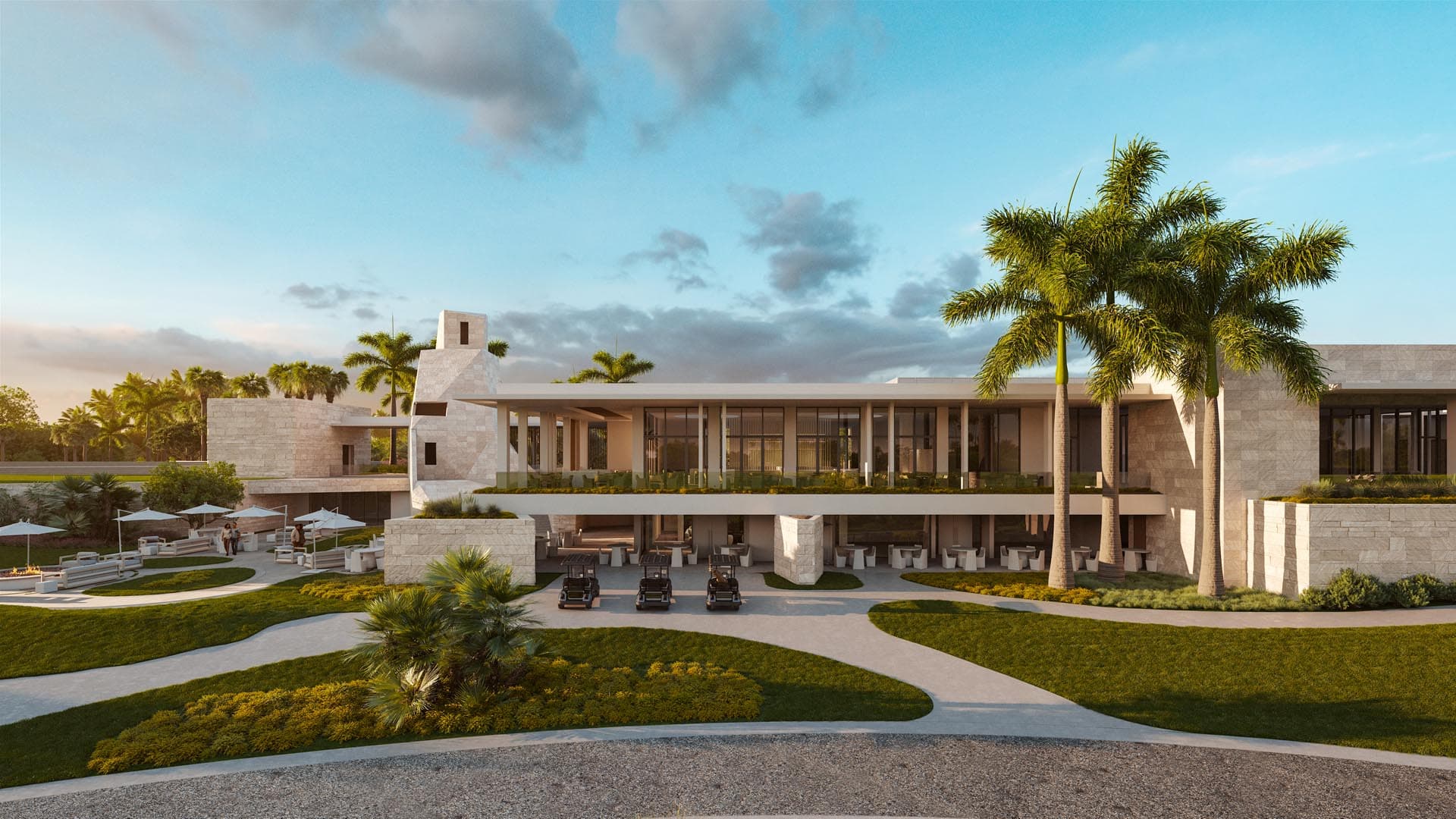
For 52 years, Carrollwood Country Club has anchored Tampa's northwest corridor with 27 holes of championship golf. The Pine course, one of three interconnected 9-hole layouts designed by Dan Maples, represents the club's commitment to precision golf architecture within Florida's residential golf community model.
Founding and Vision
Carrollwood Country Club opened in 1972 as the centerpiece of Carrollwood Village, a master-planned community in northwest Tampa. The development followed the successful Florida model of integrating championship golf with residential living, capitalizing on Tampa Bay's population growth in the 1970s.
Dan Maples, son of renowned architect Ellis Maples, designed the club's unique 27-hole configuration. Rather than building a traditional 18-hole course with a separate 9-hole addition, Maples created three distinct 12-hole loops that could be combined into various 18-hole configurations. This design accommodated the irregular shape of the 200-acre property while maximizing golf options for members.
The club's founding coincided with Tampa's emergence as a major metropolitan area. Hillsborough County's population grew from 490,265 in 1970 to 646,960 by 1980, creating demand for country club amenities among the area's expanding professional class.
Early Years and Development
The club's first decade established its reputation among Tampa's golf community. The Pine course, typically paired with either the Oak or Palm layouts for 18-hole rounds, challenged members with water hazards on 8 holes and strategically placed bunkers throughout the routing.
By 1980, membership had stabilized at approximately 400 families. The club invested $1.2 million in facility improvements during its first eight years, including expansion of the clubhouse from 8,000 to 12,000 square feet and installation of an irrigation system that reduced course closure days by 60%.
The addition of 8 Har-Tru tennis courts in 1978 diversified the club's recreational offerings. Florida's year-round tennis season made the sport a natural complement to golf, particularly during summer months when afternoon thunderstorms frequently interrupted play.
Growth and Evolution Through the Decades
The 1990s brought significant infrastructure investment. The club spent $800,000 renovating all three courses in 1994, improving drainage and rebuilding 15 greens to USGA specifications. This project reduced average green speeds from 8.5 to 10.2 on the Stimpmeter, bringing the courses into line with contemporary championship standards.
Tennis facilities expanded during this period with the addition of stadium lighting on all 8 courts, extending playing hours and enabling evening tournaments. The club also constructed a junior Olympic-sized heated swimming pool, responding to member demand for year-round aquatic amenities.
In 2003, the club completed a $1.5 million clubhouse expansion, adding private dining facilities and increasing event space capacity to 200 guests. This investment reflected the growing importance of social and corporate events to the club's financial model.
Tournament Heritage and Competition
Carrollwood Country Club has hosted numerous regional tournaments across its 52-year history. The club's 27-hole configuration allows tournament directors to utilize different course combinations, with the Pine-Oak pairing serving as the most challenging at approximately 6,800 yards from the championship tees.
The club has served as a qualifying site for the Florida State Golf Association Amateur Championship on four occasions since 1985. Additionally, it has hosted the Tampa Bay Junior Golf Championship annually since 1992, contributing to youth golf development in the region.
Member tournaments include monthly medal play competitions and an annual club championship that rotates through all possible 18-hole combinations over three days. The club's handicap system maintains detailed stroke averages: members average 12.4 strokes over par on the Pine-Oak combination and 11.8 on the Pine-Palm routing.
Present Day Operations
Today, Carrollwood Country Club maintains 350 memberships with a current initiation fee of $10. The club operates without a traditional waitlist, instead requiring potential members to submit applications for board review. This membership model reflects the club's position within Tampa's competitive private club market.
The facility encompasses comprehensive amenities beyond golf. Eight Har-Tru tennis courts maintain a utilization rate of 65% during peak months (November through April). The fitness center, expanded in 2018, includes cardiovascular equipment and strength training apparatus serving approximately 40% of the membership base.
| Facility Component | Specification |
|---|---|
| Total Holes | 27 (three 12-hole layouts) |
| Pine Course Yardage | Varies by combination |
| Tennis Courts | 8 Har-Tru with stadium lighting |
| Swimming Pool | Junior Olympic-sized, heated |
| Clubhouse Size | 18,000 square feet |
| Event Capacity | 200 guests |
| Practice Facility | Multiple tees, practice greens |
Dining operations include both casual and fine dining venues within the clubhouse. The club's banquet facilities generate approximately 30% of food and beverage revenue through member events and outside functions.
Timeline of Development
| Year | Development |
|---|---|
| 1972 | Club founded with 27-hole Dan Maples design |
| 1978 | Eight Har-Tru tennis courts added |
| 1980 | Original clubhouse expansion completed |
| 1985 | First FSGA Amateur qualifying site designation |
| 1994 | $800,000 course renovation project |
| 2003 | $1.5 million clubhouse expansion |
| 2018 | Fitness center modernization |
| 2024 | Current membership structure established |
The Pine course continues to serve as a cornerstone of Tampa's private golf community, maintaining the architectural integrity of Dan Maples' original design while adapting to contemporary member expectations.