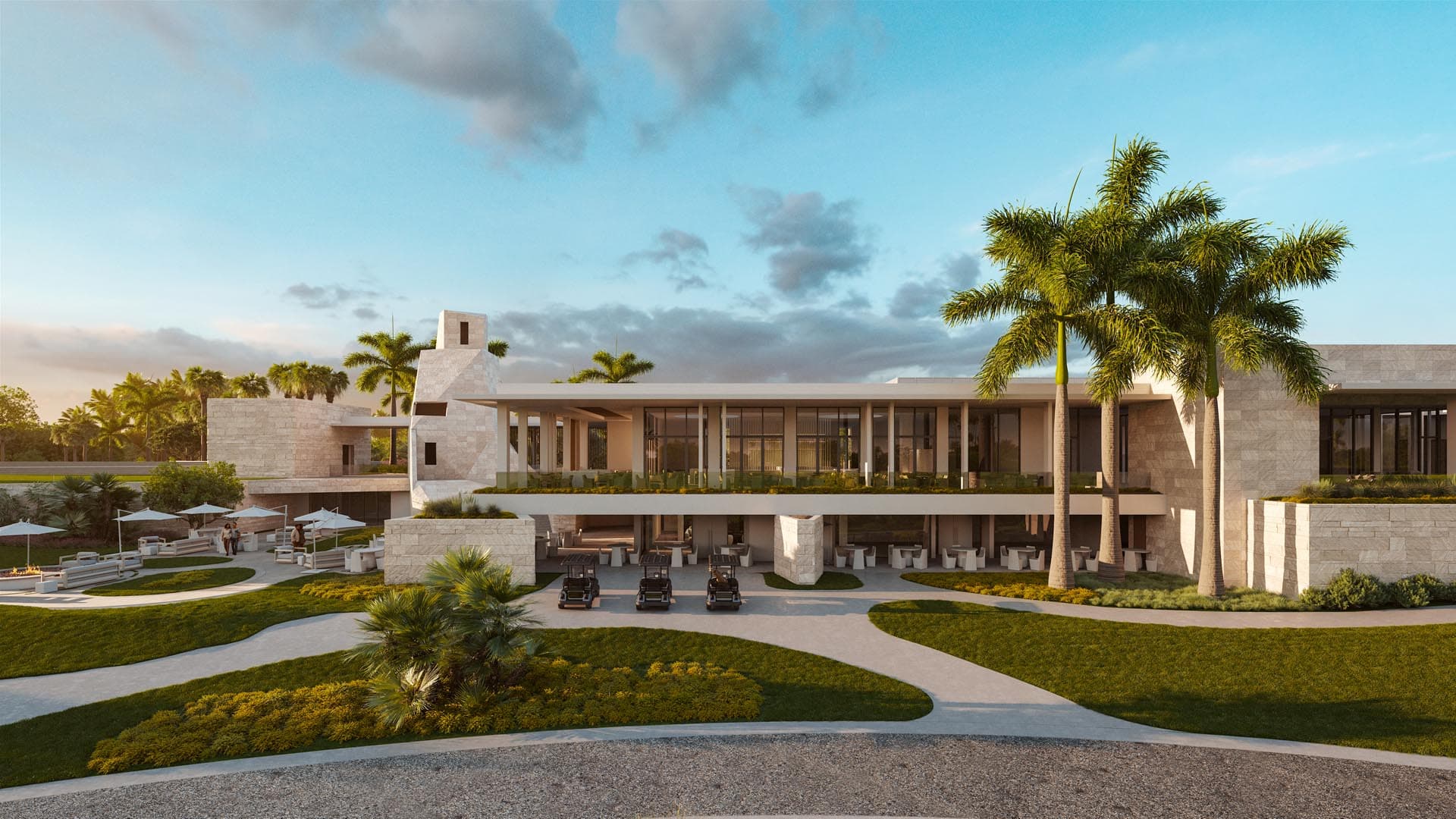
Since 1954, Coral Ridge Country Club has served Fort Lauderdale's elite with a distinctive membership-by-invitation-only policy that has maintained its exclusivity for 70 years. What began as a single championship course has evolved into a 27-hole complex that underwent comprehensive renovation in 2020 under the direction of Rees Jones, son of the original architect.
Founding: Robert Trent Jones Sr. Creates a Masterpiece
The club's founding in 1954 represented a significant moment in Florida golf history, as Robert Trent Jones Sr. was commissioned to design what would become one of his most enduring Southeastern layouts. Jones, who had already established his reputation with courses like Hazeltine National and Spyglass Hill, brought his signature strategic design philosophy to Fort Lauderdale's unique coastal terrain.
The original course capitalized on Fort Lauderdale's ocean breezes, with Jones incorporating natural elevation changes and strategic water features that would challenge players while showcasing the area's subtropical beauty. The par-72 layout was designed to accommodate the growing population of affluent winter residents who were beginning to establish permanent roots in South Florida.
The club's founding coincided with Fort Lauderdale's transformation from a small coastal town of 36,000 residents in 1950 to a burgeoning metropolitan area. By 1954, the city's population had grown by 40%, creating demand for exclusive recreational facilities that could serve the area's expanding upper class.
Early Years: Building Tradition Through Exclusivity
Coral Ridge Country Club's early decades were marked by its commitment to exclusivity through invitation-only membership, a policy that distinguished it from other Fort Lauderdale clubs. While most private clubs of the era relied on traditional application processes, Coral Ridge's sponsorship requirement created a more intimate membership base that fostered deeper community connections.
The club's social calendar in the 1960s and 1970s featured formal dining events that drew members from Fort Lauderdale's business and social elite. The original clubhouse design emphasized elegant entertaining spaces, with the main dining room and bar areas serving as focal points for member interaction.
During this period, the club's golf course gained recognition among South Florida's golf community for its challenging design and impeccable conditioning. The Robert Trent Jones Sr. layout required both strategic thinking and precise execution, particularly on holes where ocean breezes could dramatically affect ball flight.
Growth & Evolution: From 18 to 27 Holes
The expansion to 27 holes represented Coral Ridge's most significant physical transformation, allowing the club to accommodate growing membership demand while maintaining the exclusivity that defined its character. The additional nine holes were designed to complement Jones's original routing while providing variety for regular play.
This expansion coincided with Fort Lauderdale's continued growth throughout the 1980s and 1990s, when the metropolitan area's population increased by 25% per decade. The club's location became increasingly valuable as surrounding real estate values appreciated, with nearby properties commanding premium prices due to their proximity to the exclusive facility.
The club enhanced its amenities portfolio during this period, adding comprehensive tennis facilities, fitness areas, and expanded dining options. The addition of a terrace dining area capitalized on South Florida's year-round climate, providing members with outdoor dining experiences that showcased the course's natural beauty.
Tournament History: Host to Prestigious Events
While maintaining its private character, Coral Ridge has hosted numerous regional and invitational tournaments that have showcased the course's challenging design to competitive players. The club's tournament calendar has typically featured member-guest events, club championships, and select invitational competitions that maintain the facility's reputation for hosting high-caliber golf.
The course's design has proven particularly suitable for tournament play, with its strategic bunkering and water features creating scoring separations that reward precision over power. Ocean breezes add an additional variable that has historically favored local knowledge and course management skills.
Today: Rees Jones Renovation Modernizes a Classic
The 2020 renovation under Rees Jones represented a $10+ million investment in updating the course while preserving its essential character. Jones, working from his father's original design principles, modernized green complexes, updated irrigation systems, and enhanced strategic elements to accommodate modern equipment while maintaining the course's traditional challenges.
The renovation addressed maintenance efficiency through improved drainage and updated cart paths, while green expansions provided additional pin positions for daily play variety. New tee complexes offer multiple yardage options, accommodating players across skill levels while preserving the course's championship credentials.
Current initiation fees of $70,000 reflect the club's position in Fort Lauderdale's competitive private club market, where similar facilities command comparable dues. The invitation-only membership policy continues to limit access, with prospective members requiring sponsorship from current members.
Timeline of Coral Ridge Country Club
| Year | Milestone |
|---|---|
| 1954 | Club founded with Robert Trent Jones Sr. design |
| 1960s | Established invitation-only membership policy |
| 1970s | Added comprehensive tennis facilities |
| 1980s | Expanded to 27-hole configuration |
| 1990s | Enhanced clubhouse and dining facilities |
| 2000s | Added fitness center and updated amenities |
| 2020 | Major course renovation completed by Rees Jones |