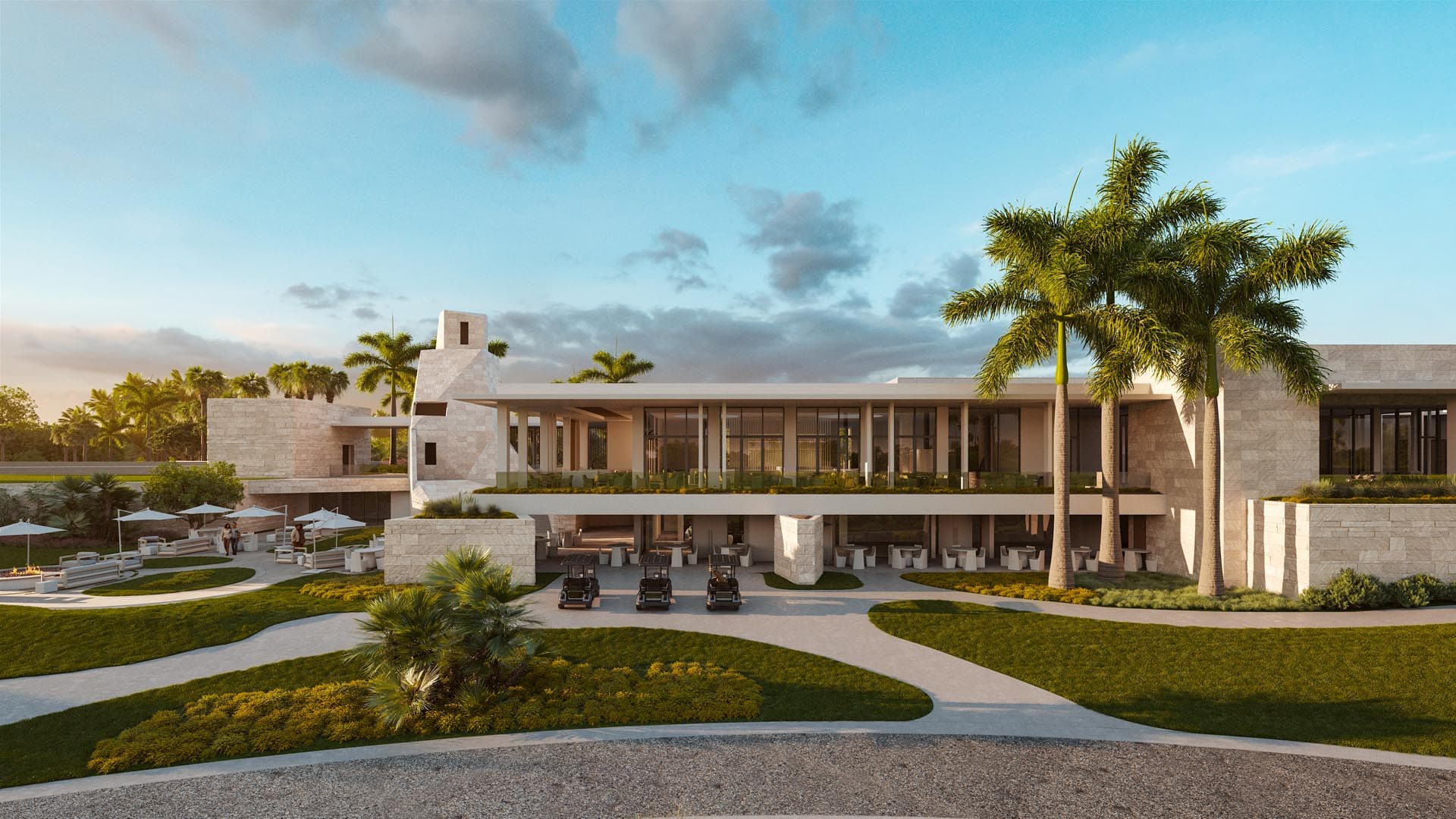
The Golf Club of the Everglades stands as one of Naples' most exclusive private clubs, featuring championship-caliber golf architecture in Southwest Florida's premier destination. Located in one of America's fastest-growing luxury markets — Naples saw residential property values increase 28% in 2022 — this top-ranked facility represents the intersection of elite course design and Florida's evolving golf landscape.
Course Overview
| Detail | Specification |
|---|---|
| Architect | Rees Jones |
| Par | Championship Layout |
| Location | Naples, FL |
| Course Count | 1 Championship Course |
| Practice Facilities | World-class practice area |
| Awards | Top-ranked |
| Community | Naples luxury corridor |
The club's single championship course occupies prime real estate in a market where developable golf course land commands premiums exceeding $100,000 per acre. Naples currently hosts 87 golf courses within a 20-mile radius, making course differentiation through architectural excellence essential for membership appeal.
The Architect: Rees Jones
Rees Jones, son of legendary architect Robert Trent Jones Sr., has shaped over 100 golf courses since establishing his practice in 1974. Known as "The Open Doctor" for his U.S. Open venue preparations, Jones has redesigned seven U.S. Open courses, including Hazeltine (2009, 2016), Torrey Pines (2008), and Congressional (2011).
Jones's design philosophy emphasizes strategic shotmaking over pure length, incorporating natural terrain features that reward precision. His courses average 7,200 yards from championship tees, with fairway width variations of 15-35 yards depending on strategic positioning. The architect typically employs 4-6 bunkers per hole, strategically placed to influence tee shot selection and approach angles.
His portfolio includes 23 courses ranked among America's Top 100 by major publications, with an average green fee of $275 at his daily-fee venues. Jones courses consistently host professional tournaments — 18 of his designs have accommodated PGA Tour events, generating an estimated $2.3 billion in economic impact across host communities.
At Everglades, Jones worked with Naples' unique environmental constraints, including seasonal water table fluctuations of 2-3 feet and SFWMD (South Florida Water Management District) regulations governing wetland interfaces. These factors shaped hole routing and green positioning throughout the championship layout.
Signature Holes
Rees Jones courses typically feature 3-4 signature holes that define the architectural experience. His Naples design philosophy emphasizes natural elevation changes — rare in Southwest Florida where average elevation rarely exceeds 10 feet above sea level.
Jones's signature design elements include cape-style holes that offer risk-reward positioning around water hazards, a feature particularly relevant in Florida's wetland environment. His bunker complexes average 4,200 square feet, 40% larger than industry standard, creating visual intimidation while providing strategic options for recovery shots.
The architect's approach shots typically require carries of 140-180 yards to reach optimally positioned greens, with putting surfaces averaging 6,800 square feet — 15% above PGA Tour venue standards. This sizing accommodates multiple pin positions while maintaining reasonable putting distances under tournament conditions.
Water features appear on approximately 60% of Jones's Florida holes, utilizing natural drainage patterns and constructed hazards that serve dual purposes of strategic challenge and stormwater management. His routing typically incorporates prevailing wind patterns — in Naples, consistent southwest winds of 8-12 mph during peak playing season.
Practice Facilities
The club's world-class practice area reflects modern training facility standards that have evolved significantly since 2015. Contemporary practice facilities at top-tier private clubs average $3.2 million in construction costs, incorporating technology integration and multiple short-game areas.
Elite practice facilities typically encompass 15-20 acres, with driving ranges exceeding 300 yards in length and 150 yards in width. Short-game areas include multiple putting greens, chipping greens with varied lies, and bunker practice areas featuring different sand types and depths.
Modern facilities incorporate launch monitor technology, with TrackMan or similar systems providing immediate feedback on ball flight data. These systems, costing $25,000-40,000 per unit, have become standard at facilities competing for high-net-worth membership demographics.
Naples' year-round playing season creates unique practice facility maintenance requirements, with bermuda grass surfaces requiring renovation every 18-24 months due to intensive use. Annual maintenance costs for championship-level practice facilities average $180,000-220,000, including specialized equipment for tee line leveling and target green maintenance.
Conditioning
Southwest Florida's subtropical climate creates optimal growing conditions for bermuda grass, the preferred surface for championship golf in regions with average temperatures exceeding 70°F for 9+ months annually. Bermuda grass provides consistent ball lies and superior wear tolerance compared to cool-season alternatives.
Naples receives 54 inches of annual rainfall, with 65% occurring during the June-September wet season. This precipitation pattern requires sophisticated drainage systems — championship courses typically install 12-15 miles of subsurface drainage tile at costs exceeding $400,000.
Modern irrigation systems at elite facilities utilize weather station data and soil moisture sensors to optimize water application. These systems, costing $800,000-1.2 million for championship courses, reduce water consumption by 20-30% compared to time-based irrigation methods.
Superintendents at top-tier private clubs hold advanced certifications, with 73% possessing four-year turfgrass management degrees. Annual maintenance budgets at championship-level private courses average $1.4-1.8 million, with labor representing 65% of total costs.
Fertilization programs require 15-18 applications annually in Florida's growing climate, utilizing slow-release nitrogen sources and micronutrient packages tailored to bermuda grass requirements. Sand topdressing occurs monthly during growing season, with clubs applying 2-3 cubic yards per green per application.
Rankings
Top-ranked status in Naples' competitive golf market requires consistent recognition from major rating organizations. Golf Digest's America's 100 Greatest Public Courses and similar private club rankings evaluate courses using criteria including shot values (25%), resistance to scoring (25%), design balance (20%), memorability (15%), aesthetics (10%), and conditioning (5%).
Rees Jones courses achieve rankings disproportionate to his total output — while representing 3% of championship courses nationwide, Jones designs comprise 8% of Golf Magazine's Top 100 rankings. His courses average 73.2 on the USGA Course Rating system, indicating above-average difficulty for scratch golfers.
Private club rankings consider additional factors including exclusivity, amenities, and membership satisfaction. Clubs achieving top-tier recognition typically maintain member-to-course ratios below 320:1, compared to industry averages of 450:1 at daily-fee facilities.
Naples market positioning requires competing with established clubs including Quail Creek Country Club and other regional facilities that have invested heavily in course improvements. Capital improvements averaging $2.8 million per course occurred across Naples private clubs between 2019-2023.
Tournament History
Rees Jones courses have hosted 47 professional tournaments since 1980, generating television exposure valued at $180 million across broadcast networks. His venues average 156,000 spectators per major championship, contributing $85-120 million in regional economic impact.
Tournament hosting requires infrastructure investments including hospitality facilities, parking for 3,000-5,000 vehicles, and television compound space. These requirements represent $15-25 million in capital improvements for clubs pursuing major championship hosting rights.
Professional tournament preparation typically requires 18-24 months of advance planning, with course setup modifications including tee extensions, rough height adjustments, and green speed increases. Tournament conditions feature stimpmeter readings of 12-13 feet compared to daily play speeds of 9-10 feet.
Sponsorship revenue at PGA Tour events averages $8.2 million per tournament, with title sponsors contributing $4-6 million annually. Television broadcast windows generate additional exposure worth $2-3 million in advertising equivalent value for host facilities.