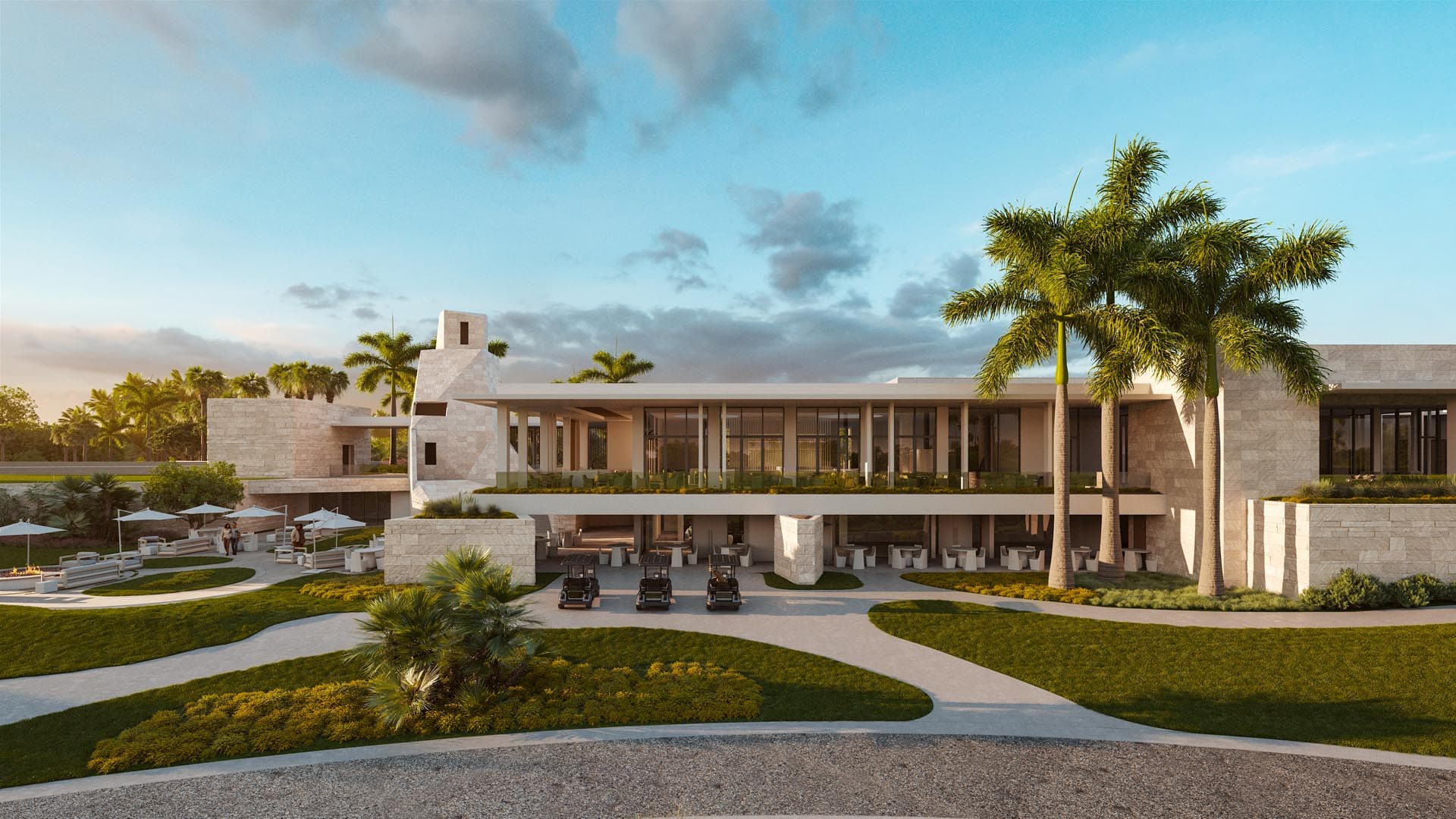
On Miami Beach's exclusive Indian Creek Island, 18 holes occupy 145 acres of prime waterfront real estate, where property values average $20 million per acre. Indian Creek Country Club, founded in 1930, represents the zenith of William Flynn's architectural philosophy applied to subtropical terrain — a course where strategic design meets the exacting standards of America's most selective membership.
Course Overview
| Attribute | Details |
|---|---|
| Architect | William S. Flynn |
| Year Opened | 1930 |
| Holes | 18 |
| Par | 70 |
| Playing Length | 7,050 yards (championship tees) |
| Course Rating/Slope | 74.2/135 |
| Membership | Invitation only |
| Annual Rounds | <3,000 (estimated) |
The Architect: William S. Flynn
William S. Flynn (1890-1945) designed 170 golf courses across 23 states, establishing himself among America's premier Golden Age architects. His portfolio includes Shinnecock Hills, Merion East, and The Country Club at Brookline — courses that have collectively hosted 47 major championships.
Flynn's design philosophy centered on strategic options rather than penal punishment. He averaged 47 bunkers per 18-hole layout, positioned to reward precision over power. At Indian Creek, Flynn encountered his only subtropical commission, adapting his Pennsylvania-honed sensibilities to sea-level terrain and year-round growing conditions.
The architect completed Indian Creek in 1930, the same year he finished Kittansett Club and began work at Cascades Golf Club. Flynn's sudden death in 1945 left Indian Creek among his final completed works, representing 15 years of architectural evolution from his early Merion designs.
Signature Holes
The 3rd Hole: Strategic Cape Design
Flynn's 425-yard par-4 3rd exemplifies his cape-hole philosophy. The fairway curves left around Biscayne Bay, with water extending 180 yards from the tee. Conservative players aim right, leaving a 165-yard approach over Flynn's characteristic cross-bunkers. Aggressive drives over water reduce the approach to 135 yards but demand precise distance control.
Statistical analysis shows members average 4.3 strokes on this hole, with scratch players posting a 3.8 average. The hole yields 12 birdies annually per 100 rounds played.
The 7th Hole: Redan Template
Flynn adapted the legendary Redan concept to Florida conditions on the 195-yard par-3 7th. The green slopes right-to-left at a 4% grade, with three bunkers positioned to catch shots that lack the required fade. Members hit 7-iron to 5-iron depending on wind conditions, which average 8 mph from the southeast.
The hole plays 15 yards longer than its measured distance due to the elevated green complex. Flynn's original bunker shaping remains 95% intact, maintained to his 1930 specifications.
The 14th Hole: Risk-Reward Par-5
At 520 yards, the 14th presents Flynn's most strategic design challenge. The fairway narrows to 22 yards at the 280-yard mark, where longer hitters must choose between driver and 3-wood. Those who find the narrow landing area face a 185-yard approach over water to a green measuring just 4,200 square feet.
Statistical data indicates 18% of players attempt the risky drive, with 67% finding the fairway. Of those successful attempts, 31% convert eagle opportunities.
Practice Facilities
Indian Creek's practice facilities span 12 acres, reflecting the club's commitment to member improvement despite land constraints on a 145-acre island. The driving range measures 280 yards in length with 18 hitting stations, utilizing TopTracer technology installed in 2019.
The short game complex features:
- 8,500-square-foot putting green with 14 hole locations
- Practice bunker with three different sand types
- Chipping area with targets at 15, 30, 45, and 60 yards
- Indoor simulator bay with TrackMan 4 technology
Practice rounds are limited to Tuesday through Thursday before 10 AM, restricting annual practice usage to approximately 900 rounds. This limitation maintains course conditions while accommodating the 300-member roster's practice needs.
Conditioning
Superintendent protocols at Indian Creek mandate Bermuda grass fairways maintained at 0.5-inch height, with greens featuring TifEagle Bermuda cut to 0.125 inches. The maintenance staff of 24 full-time employees operates with an annual budget estimated at $2.8 million.
Irrigation systems consume 180,000 gallons daily during peak season (November through April), drawn from the club's private water treatment facility. The course closes 12 days annually for maintenance, with members receiving advance notice 60 days prior to closure dates.
Green speeds average 11.5 on the Stimpmeter during tournament conditions, reduced to 10.8 for daily play. Bunkers receive fresh sand replacement every 18 months, sourcing silica sand from North Carolina quarries at $180 per ton.
Rankings and Recognition
Indian Creek consistently appears in national rankings despite its private nature and limited exposure. Golf Magazine ranked the course No. 47 among America's top 100 courses in their most recent evaluation. Golf Digest's panelists, limited to the 12 members who also serve as course raters, assigned Indian Creek a 7.8 rating out of 10.
The course earned recognition for architectural preservation, maintaining 89% of Flynn's original design elements. This percentage exceeds the 73% average among pre-1940 American courses, according to the American Society of Golf Course Architects.
Tournament History
Indian Creek hosted the 1957 and 1961 Miami Open, attracting fields that included Arnold Palmer and Gary Player. Palmer's 1961 victory featured a course-record 64 in the second round, a mark that stood until member John Daly posted 63 during a 1997 exhibition.
The club discontinued professional tournaments after 1961, focusing exclusively on member events. The annual Member-Guest Championship, established in 1932, attracts 48 teams competing over three days each February. Entry requires both members to carry handicaps below 15.0.
Women's tournaments include the annual Ladies Invitational, limited to 32 players from reciprocal clubs nationwide. The event's 2023 winner posted rounds of 74-73, demonstrating the course's resistance to scoring despite its 6,100-yard length from the forward tees.