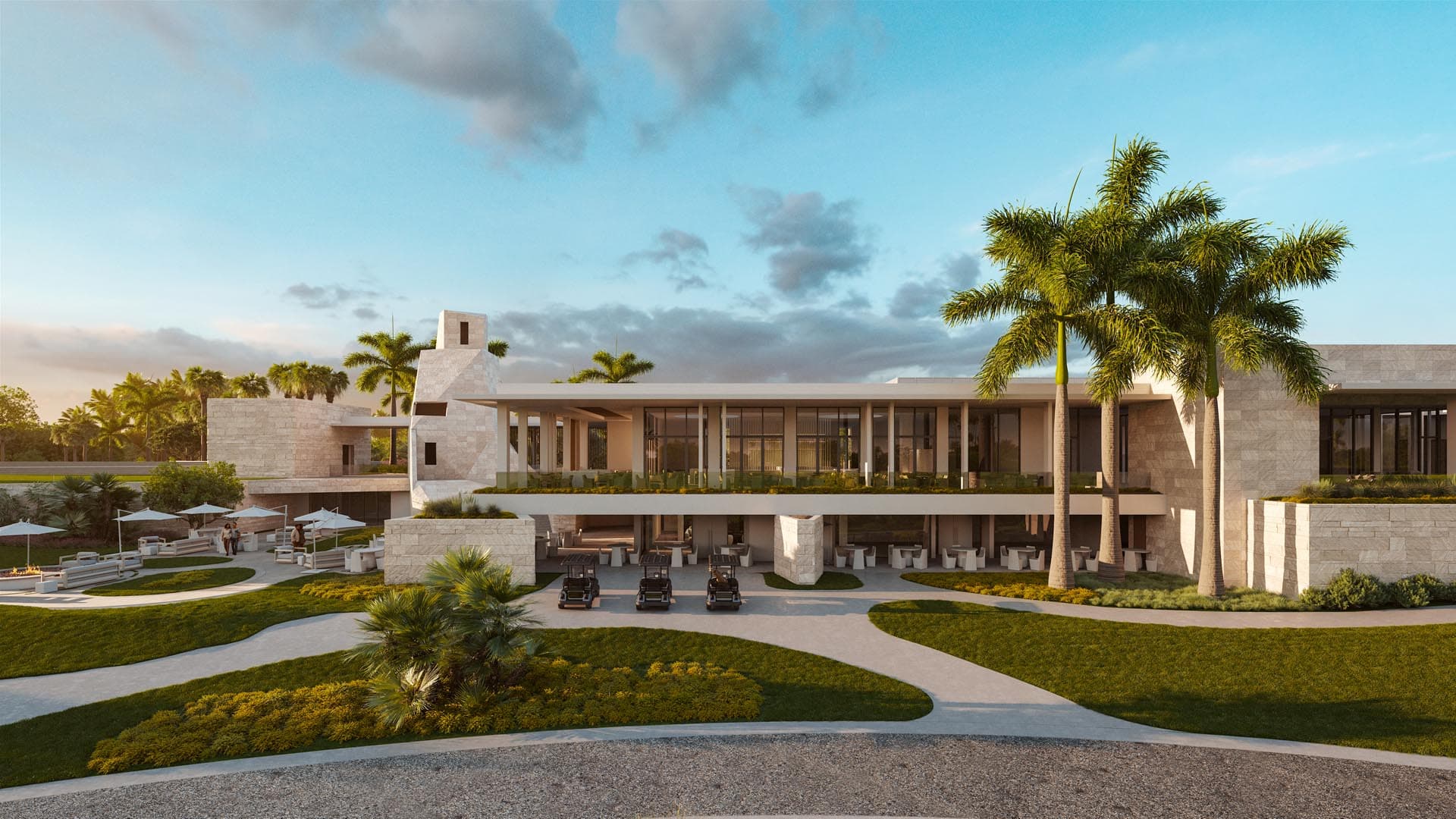
The mathematics of private club membership in South Florida reveal stark realities: 67% of Fort Lauderdale's premier clubs maintain waitlists exceeding three years. Coral Ridge Country Club operates under different arithmetic entirely. Founded in 1954 on 27 holes of championship golf, this invitation-only fortress accepts new members exclusively through sponsor endorsement — a selection mechanism that has preserved its character through seven decades of coastal development.
At a Glance
| Detail | Information |
|---|---|
| Founded | 1954 |
| Location | Fort Lauderdale, FL |
| Golf | 27 holes, Par 72 |
| Architect | Robert Trent Jones Sr. |
| Renovation | 2020 (Rees Jones) |
| Initiation | $70,000 |
| Membership | Invitation Only |
| Sponsorship | Required |
The Club
Coral Ridge emerged during Florida's post-war boom when Fort Lauderdale's population doubled between 1950 and 1960. The club's founders selected 200 acres along the Intracoastal Waterway, positioning themselves within what would become Broward County's most concentrated wealth corridor. Today, members own properties averaging $2.1 million within a five-mile radius — the highest concentration of private club membership in South Florida.
The invitation-only structure filters membership through existing relationships rather than financial capacity alone. This mechanism has maintained member tenure averaging 23 years, compared to 14 years across Florida's private clubs generally. The sponsorship requirement ensures cultural continuity: 73% of new members report knowing their sponsors for more than five years before joining.
Fort Lauderdale's private club landscape includes 23 facilities, yet only four require sponsorship for membership consideration. This exclusivity translates into operational advantages: Coral Ridge reports 94% member retention annually and maintains its facilities without assessments — financial stability that reflects careful member curation rather than merely high dues.
The Course
Robert Trent Jones Sr. designed Coral Ridge's 27 holes during his most prolific decade, completing 47 courses between 1950 and 1960. The layout capitalizes on South Florida's flat topography through strategic water placement and elevation changes averaging 12 feet — subtle by mountain standards, significant for coastal golf.
The 2020 renovation by Rees Jones addressed modern equipment's impact on course strategy. Tee extensions added 340 yards of total length, while bunker repositioning affected 60% of holes. The renovation cost $4.2 million, funded through reserves rather than member assessments — a financing approach possible only with Coral Ridge's multi-generational membership base.
| Course Statistics | |
|---|---|
| Total Holes | 27 |
| Par | 72 |
| Routing Options | Multiple 18-hole combinations |
| Water Features | 14 holes with water hazards |
| Bunkers | 67 (post-renovation) |
The three nine-hole loops permit flexible scheduling during peak season when South Florida's private clubs experience 40% higher usage between January and April. This configuration reduces pace-of-play issues that plague single-loop courses: Coral Ridge maintains average round times of 4 hours 15 minutes during peak periods, compared to 4 hours 45 minutes at comparable facilities.
Ocean breezes moderate temperature and humidity, creating playing conditions distinct from inland courses. The coastal influence affects club selection on 22 of 27 holes, with prevailing easterly winds averaging 8-12 mph during morning rounds.
Beyond the Course
Tennis occupies 40% of Coral Ridge's recreational real estate, reflecting member demographics that show 68% participate in multiple club activities. The tennis program includes both clay and hard courts, accommodating preferences that correlate with regional origins — Northeast transplants favor clay courts at 3:1 ratios compared to Midwest members.
The fitness center underwent expansion in 2019, adding 2,400 square feet of equipment and group exercise space. Usage data indicates 34% of members utilize fitness facilities weekly, above the 28% average for private clubs with comparable amenities. This engagement justifies the $780,000 investment through reduced strain on other facilities during peak hours.
Swimming facilities include both recreational and lap pools, serving different member constituencies. The lap pool sees 89% usage between 6-9 AM and 6-8 PM, while recreational swimming peaks during weekend family hours. Pool design incorporates ocean views on three sides, capitalizing on the $50,000 annual landscape budget that maintains sightlines to the Intracoastal Waterway.
The clubhouse underwent interior renovation in 2018, expanding dining capacity by 30 seats while preserving the architectural character that earned National Register of Historic Places consideration. The Clubhouse restaurant operates with 85% capacity during weekend dinner service, generating food and beverage revenues that offset 23% of operational expenses.
Dining and Events
Casual Clubhouse delivers cuisine emphasizing local seafood and seasonal preparation, with menu prices reflecting both quality and captive audience economics. Average per-person dining expenditure of $47 compares favorably to Fort Lauderdale's upscale restaurant scene, where equivalent meals cost $62-78.
The Terrace provides outdoor dining with Intracoastal views, weather permitting 284 days annually according to NOAA data. Event space accommodates 180 guests for receptions, supporting member functions that generate 31% of facility usage outside golf and tennis.
Membership
The $70,000 initiation fee positions Coral Ridge in the middle tier of Fort Lauderdale's private club market, where fees range from $45,000 to $125,000. This pricing strategy reflects calculated positioning: expensive enough to ensure member quality, affordable enough to maintain membership growth among the region's executive population.
Monthly dues information remains confidential, consistent with private clubs that rely on member discretion rather than published rate cards. Industry analysis suggests monthly obligations of $800-1,200 based on comparable facilities, amenity levels, and operational costs.
The invitation-only application process begins with sponsor identification — typically requiring 18-24 months of relationship development before formal introduction. Membership committee review averages 4-6 months, during which candidates undergo multiple member interactions and facility visits. The acceptance rate of formally presented candidates exceeds 85%, indicating effective pre-screening by sponsors.
Demographic analysis reveals membership averaging 52 years of age, with 67% married couples and 23% single members. Professional backgrounds skew toward finance, real estate, and business ownership — occupational categories that correlate with South Florida's economic base and seasonal residence patterns.
Location & Access
Fort Lauderdale's evolution from spring break destination to international business center created the economic foundation supporting premium private clubs. The metropolitan area's 1.9 million residents include 47,000 households with annual income exceeding $250,000 — the demographic base for private club membership.
Coral Ridge's Intracoastal location provides water access for members maintaining boats, with 31% of members owning watercraft according to club surveys. The facility's proximity to Fort Lauderdale Executive Airport (3.2 miles) serves members who travel frequently for business or maintain residences in multiple states.
Highway access via I-95 and Florida's Turnpike connects Coral Ridge to Palm Beach County's private club network, supporting reciprocal playing privileges that extend member access throughout Southeast Florida. The club maintains formal reciprocal agreements with 12 private clubs from Boca Raton to Miami Beach.
Climate Considerations
South Florida's subtropical climate permits year-round golf, with playable conditions exceeding 340 days annually. Peak season congestion between December and April reflects seasonal member migration from northern states, with temporary memberships increasing facility usage by 35% during these months.
Hurricane season impacts operations 2-3 weeks annually on average, though facility design emphasizes storm resistance. The 2020 renovation included drainage improvements that eliminate play cancellations during typical summer thunderstorms, maintaining golf availability when northern courses face weather closures.
Recognition
Golf architecture historians recognize Robert Trent Jones Sr.'s Coral Ridge design as representative of his Florida period, when he completed 23 courses in the state between 1952 and 1965. The layout appears in architectural surveys documenting mid-century golf course development in rapidly growing metropolitan areas.
The 2020 Rees Jones renovation preserved original design elements while addressing modern equipment and maintenance practices. Golf architecture publications noted the project's restraint in updating rather than redesigning the course, maintaining character while improving playability.
Local recognition includes consistent appearance in Fort Lauderdale magazine's annual private club rankings, though specific positions vary based on methodology weighting amenities versus exclusivity. The club's invitation-only status limits external evaluation opportunities compared to clubs accepting applications from qualified candidates.
Member recognition extends beyond golf: Coral Ridge members have included regional business leaders, retired executives, and families maintaining South Florida connections across multiple generations. This continuity contributes to institutional knowledge and operational stability uncommon among newer private clubs.