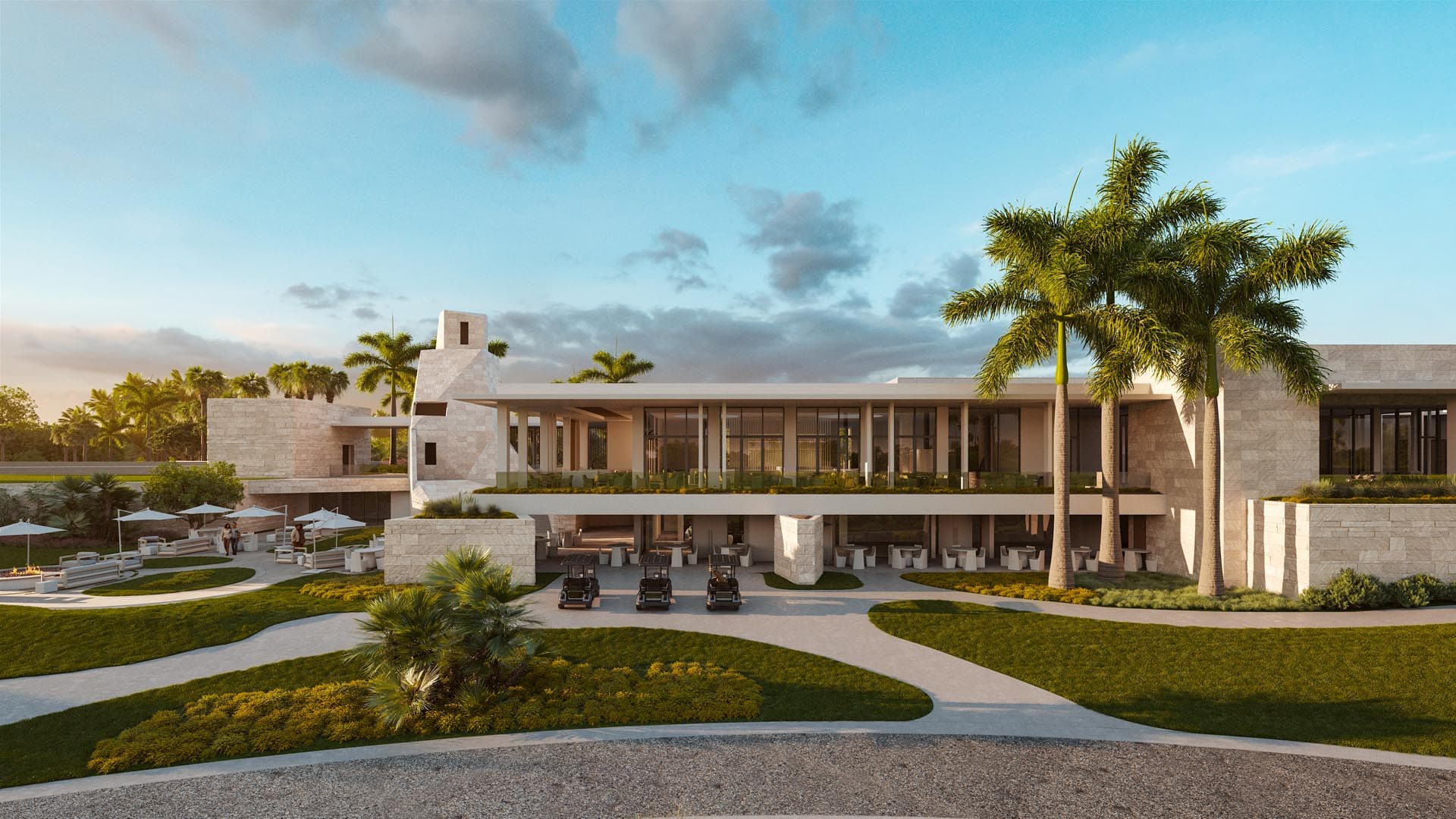
Black Diamond Ranch stands as one of Florida's most architecturally significant golf properties, where Tom Fazio transformed 2,000 acres of former phosphate mining land into three distinct championship courses. Located 75 miles north of Tampa in Lecanto, this $50,000 initiation fee club showcases Fazio's mastery of dramatic terrain in a state better known for flat layouts.
Course Overview
| Course | Architect | Par | Yardage | Slope | Rating | Year Built |
|---|---|---|---|---|---|---|
| The Quarry | Tom Fazio | 72 | 6,800+ | 140+ | 73+ | 1987 |
| The Ranch | Tom Fazio | 72 | 7,200+ | 135+ | 74+ | 1990 |
| The Highlands | Tom Fazio | 72 | 6,800+ | 138+ | 72+ | 1993 |
The three courses at Black Diamond Ranch represent Fazio's evolution as an architect across six years of development. Each layout exploits different aspects of the property's unique topography, created by decades of phosphate extraction that left behind quarries, elevation changes of up to 190 feet, and crystal-clear lakes.
The Architect: Tom Fazio's Vision
Tom Fazio designed Black Diamond Ranch during his emergence as America's premier golf course architect. By 1987, Fazio had already established his reputation with Butler National and Wild Dunes, but Black Diamond Ranch became his Florida laboratory for dramatic golf architecture. The project allowed him to create genuine elevation changes in a state where most courses rise barely 20 feet from tee to green.
Fazio's approach at Black Diamond Ranch emphasized strategic variety over penal difficulty. Rather than creating three similar courses, he crafted distinct personalities: The Quarry as a links-style test, The Ranch as a parkland challenge, and The Highlands as a mountain-style layout. This philosophy of diverse course experiences within a single property became a Fazio hallmark, later replicated at Shadow Creek and Hudson National.
The architect's use of the former mining landscape demonstrates his skill at environmental reclamation. Fazio transformed industrial scars into golf holes, with former quarry walls becoming natural hazards and extracted areas converted into water features. The project required moving over 1 million cubic yards of earth and cost approximately $15 million to complete all three courses.
Signature Holes
The Quarry: 6th Hole
The par-3 6th hole epitomizes Fazio's quarry transformation, playing 180 yards over a former mining pit to a green perched on the quarry's far edge. The hole requires precise club selection, as the 60-foot drop creates optical illusions that fool even accomplished players. Miss short, and balls disappear into the crystal-clear water below.
The Ranch: 15th Hole
This 580-yard par-5 demonstrates Fazio's strategic architecture, offering multiple routes to the green. Long hitters can attempt to carry the diagonal water hazard in two shots, while conservative players navigate around the lake in three. The green sits 40 feet above the fairway, creating a dramatic finish to the hole's risk-reward equation.
The Highlands: 17th Hole
The Highlands' penultimate hole showcases the course's mountainous character with a 420-yard par-4 that climbs 50 feet from tee to green. The fairway narrows at the landing area, demanding accuracy off the tee. The approach plays significantly shorter due to elevation, but the green's severe slopes punish imprecise iron shots.
Practice Facilities
Black Diamond Ranch's practice amenities span 15 acres and include multiple target greens, bunkers, and varied lies. The main driving range extends 350 yards with distance markers every 25 yards, accommodating simultaneous practice on all three courses. Two putting greens replicate the varying speeds found across the property's layouts.
The short-game area features a dedicated chipping green with surrounding bunkers of different sand textures, matching conditions found on each course. Practice bunkers include both fairway and greenside configurations, with depths ranging from shallow pot bunkers to deep quarry-style hazards.
Conditioning and Maintenance
Black Diamond Ranch maintains Bermuda grass fairways and TifEagle greens across all three courses. The club's maintenance budget exceeds $1.8 million annually, supporting a staff of 35 full-time groundskeepers. Green speeds average 11-12 on the Stimpmeter during peak season, with fairways cut to 0.5 inches.
Water management utilizes the property's natural quarry features, with over 200 acres of lakes providing irrigation storage. The club installed a $2.3 million irrigation system with individual hole controls, allowing precise moisture management across diverse terrain. Drainage systems prevent the flooding issues common to reclaimed mining land.
Weather patterns in Lecanto create year-round growing seasons, with course conditions typically best from November through April. Summer overseeding occurs on tees and greens, while fairways maintain their Bermuda base. The club closes each course one day per week for maintenance rotation.
Rankings and Recognition
Golf Digest consistently ranks Black Diamond Ranch's courses among America's top 100 layouts. The Quarry achieved its highest ranking at #42 in 2019, while The Ranch peaked at #67 in Golf Magazine's top 100. Golfweek places The Highlands at #89 in its modern course rankings.
The property earned Golf Digest's "Best New Private Course" award in 1988 for The Quarry, followed by similar recognition for The Ranch in 1991. Golf Magazine named Tom Fazio "Architect of the Year" partially based on his Black Diamond Ranch work. The courses regularly host corporate tournaments and member championships, with scoring averages ranging from 74-78 depending on tee selection.
| Publication | Course | Ranking | Year |
|---|---|---|---|
| Golf Digest | The Quarry | #42 | 2019 |
| Golf Magazine | The Ranch | #67 | 2020 |
| Golfweek | The Highlands | #89 | 2021 |
Tournament History
Black Diamond Ranch hosts the annual member championship across all three courses, attracting 240 participants in flight divisions. The club welcomed the Florida State Amateur in 1995 and 2003, with winning scores of 4-under and 2-under par respectively. Corporate outings generate significant revenue, with 85 events annually averaging $125,000 in total club spending.
The property's most notable tournament remains the 1999 unofficial "Battle at Black Diamond," featuring former major champions competing across all three courses. Low scores proved elusive, with the winning total reaching just 6-under par for 54 holes, demonstrating the courses' championship caliber.
Member tournaments include monthly stroke play events, with handicap divisions ensuring competitive balance. The club championship flight winners earn automatic entry to regional amateur tournaments, maintaining Black Diamond Ranch's competitive reputation.