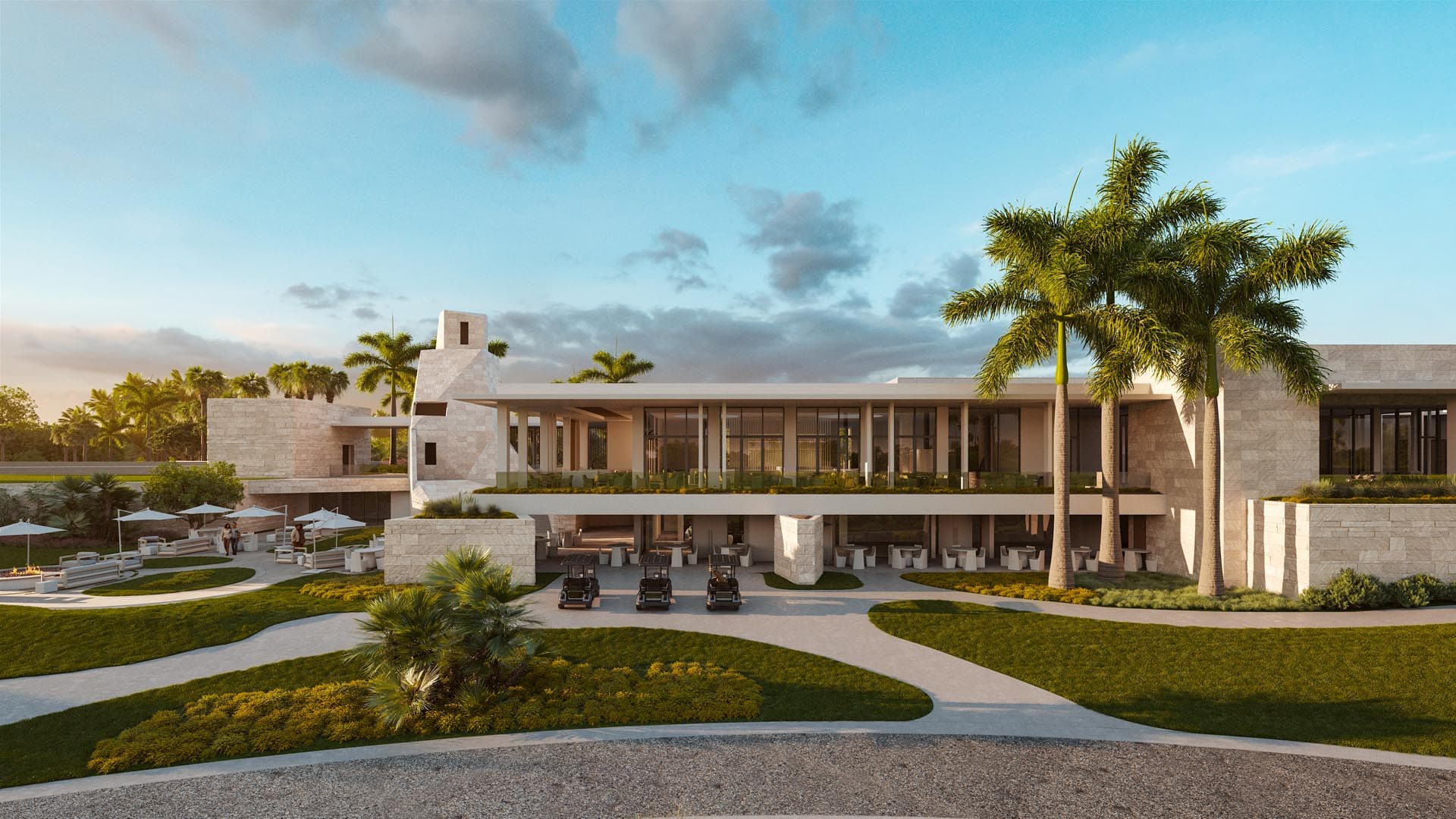
When developer Jim Kimberly envisioned Black Diamond Ranch in the mid-1980s, few could have predicted that his 2,200-acre property in Lecanto would become one of Florida's most distinctive golf communities. Unlike the flat, manufactured courses that dominated the state's golf landscape, Kimberly's ambitious project would harness the region's rare natural elevation changes to create something unprecedented: a mountain-style golf experience 50 miles north of Tampa Bay.
Founding
Black Diamond Ranch emerged from the vision of a developer who recognized the unique topographical advantages of Citrus County's mining heritage. The property, formerly home to phosphate mining operations, featured dramatic elevation changes of up to 80 feet — a geological anomaly in famously flat Florida. Kimberly commissioned Tom Fazio, then establishing himself as golf architecture's rising star, to design courses that would maximize these natural contours.
Construction began in 1987 with Fazio crafting layouts that would feel more at home in the Carolinas than central Florida. The development strategy centered on three distinct courses, each designed to showcase different aspects of the property's varied terrain. Initial membership was offered at $25,000, positioning Black Diamond Ranch in the upper tier of Florida's private club market.
Early Years
The Quarry Course opened first in 1989, immediately establishing the club's reputation for dramatic golf. Fazio routed holes around and through former mining pits, creating playing corridors with elevation changes of 40-60 feet between tees and greens. The course measured 6,821 yards from the championship tees, with a slope rating of 142 — numbers that challenged even accomplished players.
Membership growth proved steady but selective during the early 1990s. The club implemented an invite-only policy from inception, limiting annual new memberships to fewer than 50. This exclusivity, combined with initiation fees that reached $40,000 by 1995, created a waiting list that extended beyond two years by the club's fifth anniversary.
The Ranch Course followed in 1992, offering a contrasting links-style experience across the property's more open terrain. At 7,006 yards, it became the longest of the three layouts, featuring wide fairways punctuated by deep bunkers and native vegetation. The course's signature 18th hole plays downhill 575 yards to a green surrounded by water on three sides.
Growth & Evolution
Black Diamond Ranch's reputation expanded significantly following the 1994 completion of The Highlands Course. This third layout, measuring 6,248 yards, incorporated the property's most dramatic elevation changes while offering strategic options for players of varying abilities. Fazio's design featured multiple tee complexes that could adjust hole lengths by up to 100 yards, accommodating handicaps from scratch to 36.
The club's infrastructure expanded throughout the late 1990s. A 65,000-square-foot clubhouse opened in 1996, featuring multiple dining venues and a 15-room guest lodge. Tennis facilities added four courts in 1998, while the fitness center underwent a $2.4 million expansion in 2001. These amenities supported the club's evolution from a golf-focused facility to a comprehensive country club experience.
Membership demographics shifted during this period as well. While early members were predominantly local Florida residents, the club increasingly attracted seasonal members from the Northeast and Midwest. By 2000, approximately 60% of the 450-member roster maintained primary residences outside Florida, driving demand for the on-property cottages that debuted in 1999.
Tournament History
Black Diamond Ranch has hosted limited tournament play, reflecting its private club status and challenging course conditions. The facility served as a U.S. Open sectional qualifying site on three occasions between 2002 and 2010, with The Quarry Course proving particularly demanding for professional hopefuls. Sectional qualifying rounds at Black Diamond Ranch consistently produced some of the highest scoring averages among Florida venues.
The club's most significant tournament hosting occurred during the 2005 Florida State Amateur Championship. The Highlands Course provided the backdrop for what many observers considered one of the most challenging state amateur venues in decades. Scoring averages exceeded 76 throughout the four-day event, with only two players finishing under par for the championship.
Annual member tournaments remain the primary competitive focus. The club's championship flight regularly features handicaps in the single digits, reflecting the accomplished nature of the membership. The annual Member-Guest tournament, limited to 60 two-man teams, maintains a waiting list that extends multiple years.
Today
Black Diamond Ranch operates today with a membership roster capped at 475, maintaining the selective admission process established at founding. Current initiation fees have reached $50,000, while monthly dues range from $550 to $750 depending on membership category and residency status. The club's financial position remains strong, with capital assessments rare and improvements funded through operational cash flow.
Course conditions receive consistent praise from members and visitors alike. The club employs a maintenance staff of 35 year-round, increasing to 45 during peak season. Annual course maintenance budgets exceed $2.2 million across the three layouts, supporting conditions that regularly earn praise from golf publications.
Recent facility improvements include a $3.8 million clubhouse renovation completed in 2019 and ongoing upgrades to the practice facilities. The club added a short-game area in 2020, complementing the existing driving range and putting facilities. Member cottages now number 24 units, with occupancy rates exceeding 80% during peak season months.
Timeline
| Year | Milestone |
|---|---|
| 1987 | Development begins, Tom Fazio commissioned for course design |
| 1989 | The Quarry Course opens |
| 1992 | The Ranch Course completes the initial two-course layout |
| 1994 | The Highlands Course opens, completing three-course design |
| 1996 | 65,000-square-foot clubhouse opens |
| 1999 | Member cottages debut |
| 2001 | $2.4 million fitness center expansion |
| 2005 | Hosts Florida State Amateur Championship |
| 2019 | $3.8 million clubhouse renovation completed |
| 2020 | Short-game practice facility added |